With it being foggy and murky grey outside all day, it was a good time to catch up with a bit of the photo processing backlog. So I turned my thoughts back to Spring which is such a contrast to the view out of the window today. Early mornings filled with bird song, migrants arriving in waves, the birds looking bright and immaculate and the freshness of the new growth bursting forth from the plants. Such a vibrant time of year and always a pleasure to be out at first light and soaking it all in.
So for this post I just thought I would take a few of the bird images from last Spring and put them together. What could say Spring more than a bird on some willow catkins. In this case a colourful Goldfinch.
 Living by the coast there is a reasonable number of gorse bushes and normally good flocks of Linnet. I always associated one with the other as the males often use the top of these vibrant yellow flowered bushes to advertise their territory in song.


 One of the earliest migrant arrivals is the Northern Wheatear with the birds typically arriving locally from their long flight up from Africa around mid-March. They bring with them a real injection of striking colour and contrast into what is still a generally drab landscape in the early Spring with the remnants of winter still evident. Often these arriving birds are very flighty and have an annoying habitat of tending to stay just out of camera range, displaying a flash of white rump as they keep their distance ahead of you.

 Into April and migration is in full swing with the arrival of warblers and Whinchat. These birds look amazing when they arrive although the orange colours of the breast and flanks seems to quickly fade once they have been here a short while. From a photography point of view they are definitely a bird to try and catch as they arrive.
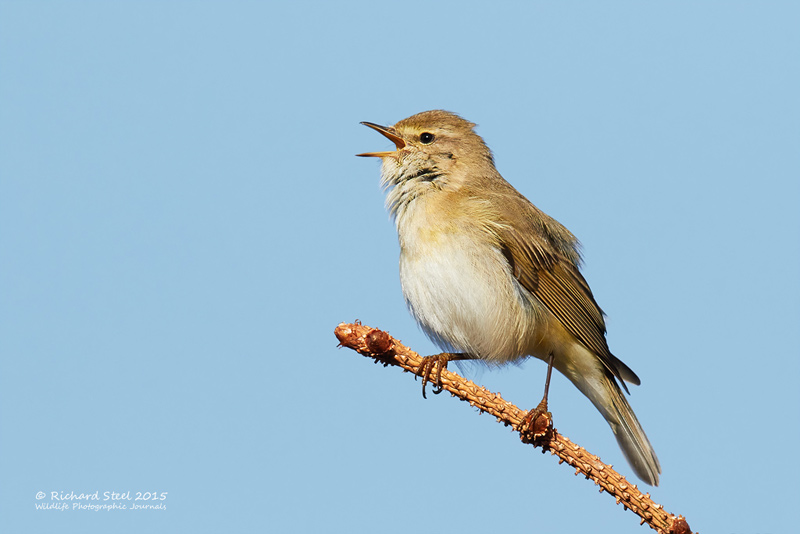
 Of course Spring is not just about sights, it is also about sounds. Unfortunately I did not get much time to photograph warblers this year with the exception of the Willow Warbler. This bird's song of descending notes I know very well, having had one singing all through the 'night' outside my bedroom when I stayed in Arctic Norway. The songster did not help with me struggling to get to sleep with the perpetual daylight outside.
So for this post I just thought I would take a few of the bird images from last Spring and put them together. What could say Spring more than a bird on some willow catkins. In this case a colourful Goldfinch.
A bird that is particularly noticeable in the Spring is the Meadow Pipit. Huge numbers migrate and on certain days it seems they are everywhere. Of course these are a favoured 'victim' of cuckoos who time their migration to arrive when other birds are beginning to lay eggs.
Many birds look at their best at this time of year as the males feathers finally wear into their fresh breeding plumage. This male Reed Bunting is nearly there with just a few tawny coloured feather ends to change before the transformation is complete.
Well having done this post and reminisced over Spring the grey murk outside suddenly looks a bit brighter. Also it has got me thinking that I should start thinking about and planning my trip abroad for next year. North, South, East or West...decisions...decisions.